


Jackery
Jackery HomePower 2000 Plus v2 Portable Power Station
Jackery HomePower 2000 Plus v2 Portable Power Station
Couldn't load pickup availability
-
Craze Outdoors Advantage
- 5 - Star Google Reviews
- Free Shipping Over $100
- Same day shipping
- 30 Day Price Match
- Easy 30 Day Returns
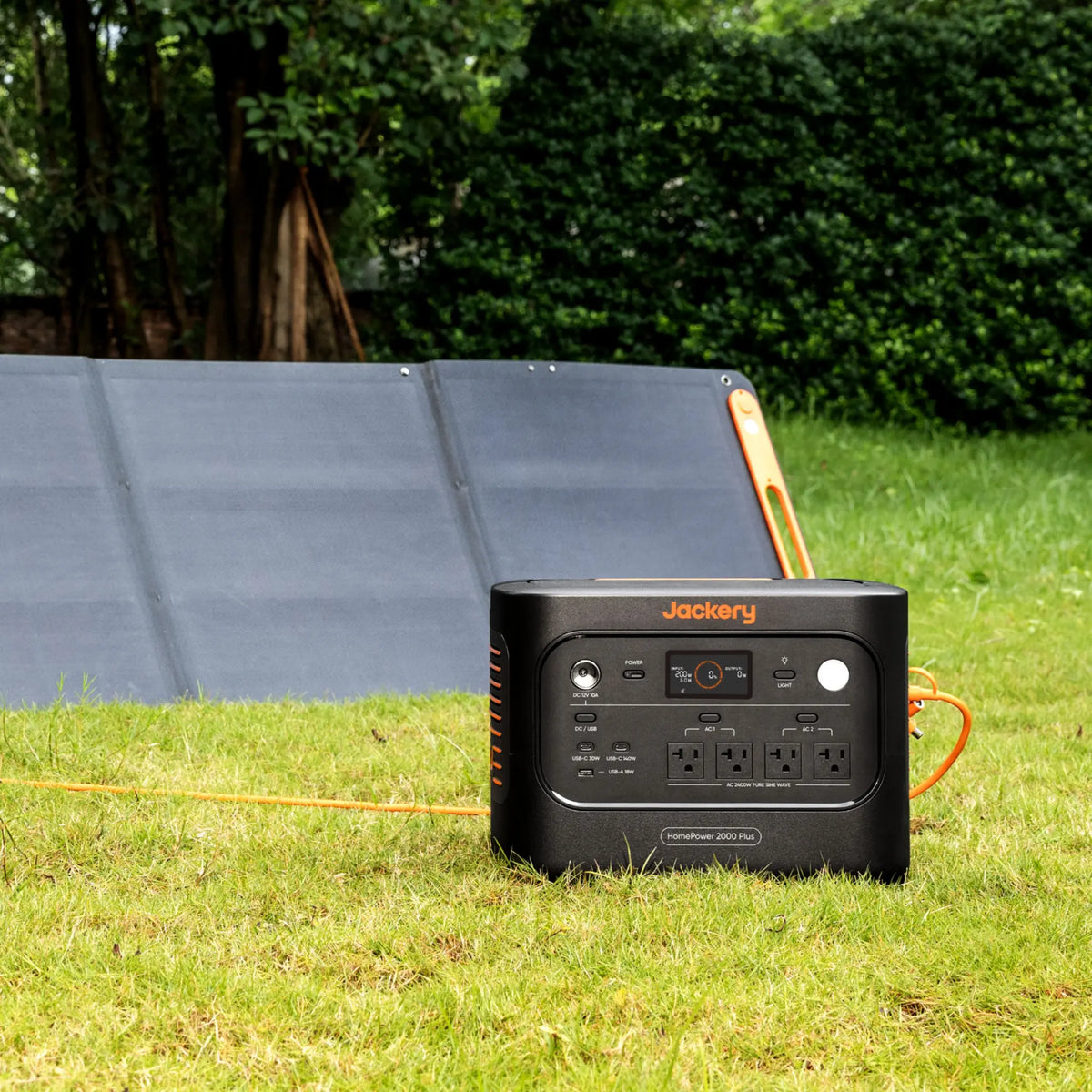
More capacity for the moments that need it. The HomePower 2000 Plus v2 packs 2048Wh and 2400W of output into a station that keeps a fridge/freezer and sump pump running through a home outage, powers a camping fridge, lights, phones, and Starlink at basecamp, and handles routers, servers, computers, and light power tools on the job. If a single charge isn't enough, expand up to 12kWh with add-on battery packs rather than reaching for a second unit — the same flexible, go-anywhere approach as the rest of the HomePower family, just with more room to work with.
Why You'll Love This
Why You'll Love This
Detailed Specifications
Detailed Specifications
What's Included
What's Included
Warranty
Warranty


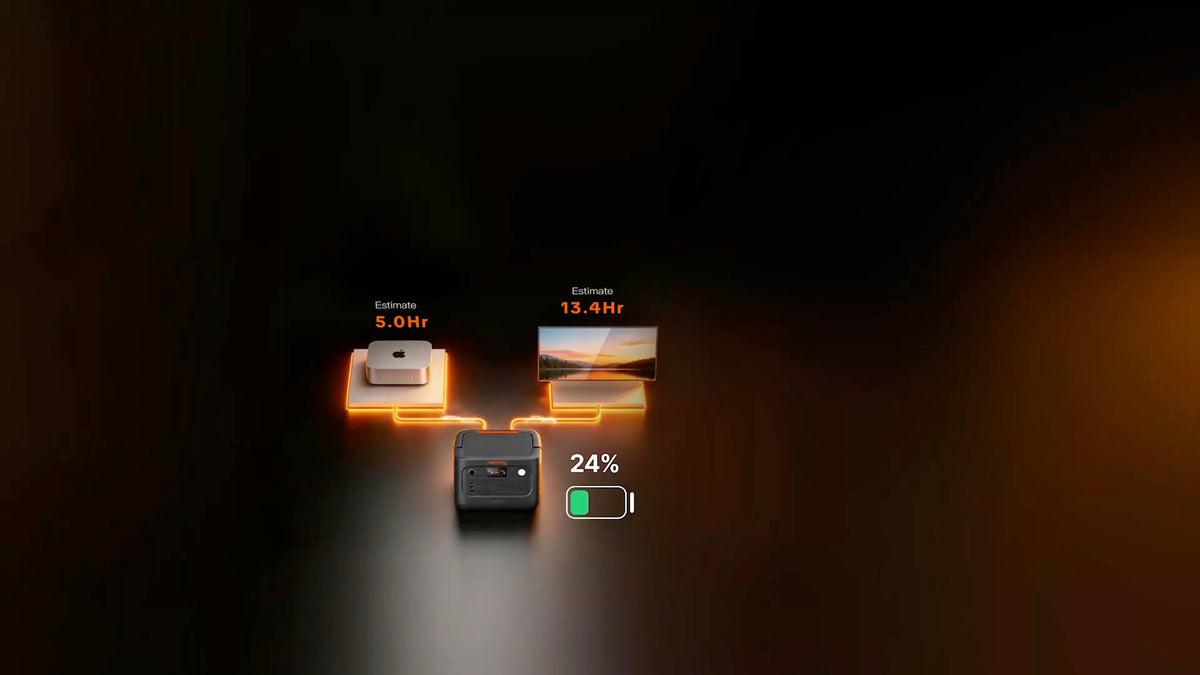
Input Your Appliances Wattage
Note: This is a calculation for reference only. Actual runtime varies with real-world use. Duty cycle significantly impacts the runtime estimate for devices like refrigerators, sump pumps, and other devices that don't draw power at a constant rate — presets for these use an average power draw (based on daily energy use) rather than their peak/label wattage.

Smarter Home Generator


Any Room in Your House
-

Kitchen
Keep your fridge and other essentials running.
-

Living Room
Run your TV, Starlink, and other consoles.
-

Bedroom
Run everything from a heated blanket to a projector.
-

Bathroom
Hair dryer? Curling iron? The Jackery HomePower 2000 Plus V2 handles this with ease.
-

RV & Van Life
Make your favourite coffee on the road, or enjoy fresh toast powered by the HomePower 2000 Plus V2


Jackery Priority Routing™
Set your priority and battery threshold — when the battery hits your set level, it automatically shuts down less critical devices and keeps your essentials running longer.


Lightweight by Design,
Heavyweight by Performance

5 Ways to Recharge 1000 v2
-

Wall Charging
Fully charged in as little as 90 minutes.
-

Solar Charging
Full solar charge in a few hours with SolarSaga panels.
-

Generator Charging
Pair with a generator for extended backup.
-

Car Charging
Top up on the road via a 12V car outlet.


FAQ
What can the HomePower 2000 Plus V2 power?
Most home essentials at once. It has 2,400W of continuous output across four AC outlets, enough for a fridge, freezer, router, lights, and kitchen appliances like a microwave or coffee maker.
A 4,800W surge rating handles the startup spike from compressors and motors. Keep the combined running wattage of everything plugged in under 2,400W.
What is Jackery Priority Routing™?
It lets you choose which devices keep power the longest. The three AC outlets are split into two circuits: AC 2 controls two outlets and AC 1 controls one.
In the Jackery app, you assign your essentials to the priority circuit and set a battery cut-off level.
When the battery reaches that level, or the unit is overloaded, the non-priority circuit shuts off automatically so your key devices (such as fridge or a router) keep running longer.
How does the built-in UPS work?
Keep the unit plugged into the wall with your devices plugged into it. If grid power drops, it switches them to battery in 10 milliseconds or less,¹ so computers, routers, and fridges stay on without restarting. While plugged in, output is limited to 1,800W, or 1,440W if the load stays above 12A for over 3 hours. Full 2,400W output returns during an outage. Before using it as a UPS, turn off Energy Saving Mode.
Do I need the Jackery app to use it?
No. It works as a power station right out of the box, and the buttons on the unit control the outputs, Emergency Charging Mode (hold POWER + LIGHT for 1 second), and Energy Saving Mode (hold POWER + AC 1 for 3 seconds). The Jackery app connects over Bluetooth or 2.4 GHz Wi-Fi and adds Jackery Priority Routing™, Time-of-Use Mode, Charging Plan, Self-powered Mode, Quiet Charging Mode, Battery Saving Mode, and remote monitoring.
What is Time-of-Use Mode, and can it lower my power bill?
If your utility charges different rates by time of day, TOU Mode charges from the grid during cheaper off-peak hours and runs your devices from the battery during peak hours. By default, it keeps a 60% backup reserve for outages. Savings depend on your rate plan,² and time-of-use pricing isn't offered everywhere in Canada. With solar panels connected, Self-powered Mode uses stored solar energy first.
Why did my outputs turn off on their own?
That's Energy Saving Mode, which is on by default so the battery doesn't drain if you forget to switch the outputs off. Any output with nothing connected, or drawing less than 25W on AC or 2W on DC/USB, shuts off after 12 hours. To turn it off, use the Jackery app or hold POWER + AC 1 for 3 seconds. Keep it off for UPS use or for low-power devices running overnight.
How fast does it recharge, and what is Emergency Charging Mode?
Standard AC charging reaches a full charge in about 98 minutes.³ When you need it ready fast, like before an incoming storm, turn on Emergency Charging Mode in the Jackery app, or by holding POWER + LIGHT for 1 second, to reach full in about 50 minutes.³ It isn't recommended for daily use, so stick with standard charging day to day.
Can I charge it with solar panels or from my vehicle?
Yes to both. The two DC inputs accept up to 800W of solar power, enough to fully recharge the unit in as little as 3.2 hours in ideal sun.⁵ The same inputs support DC-to-DC alternator charging at up to 600w while you drive, or up to 120W with the Jackery 12V car charging cable (sold separately).
Can I add more battery capacity later?
Yes. You can add up to five Jackery Battery Pack 2000 Plus V2 expansion batteries for roughly 12kWh of total capacity. The older Battery Pack 2000 Plus isn't compatible. Adding batteries extends runtime but doesn't raise the 2,400W output limit. Up to three packs can be stacked on a flat, stable surface. Stacking four or more requires placing the setup against a wall with anti-tip measures.
Can I use it in cold weather?
Yes, within its rated range. It can charge and run between -10°C and 45°C (14°F to 113°F). When temperatures drop below -10°C, keep it somewhere warmer, like inside your home or a heated vehicle, and let it return to that range before charging or using it again.
How long will the battery last over its lifetime?
It uses LiFePO4 (lithium iron phosphate) cells rated to keep at least 70% of their original capacity after 6,000 full charge cycles. That works out to many years of regular use.³
How should I store it when I'm not using it?
Whether it's between camping seasons or waiting for the next outage, don't store it with the battery drained. Left empty for 3 to 6 months, it may stop accepting a charge. Check and recharge it every three months, and run one full charge and discharge cycle at least once every 6 to 12 months to keep the battery healthy.
How long is the warranty on this device?